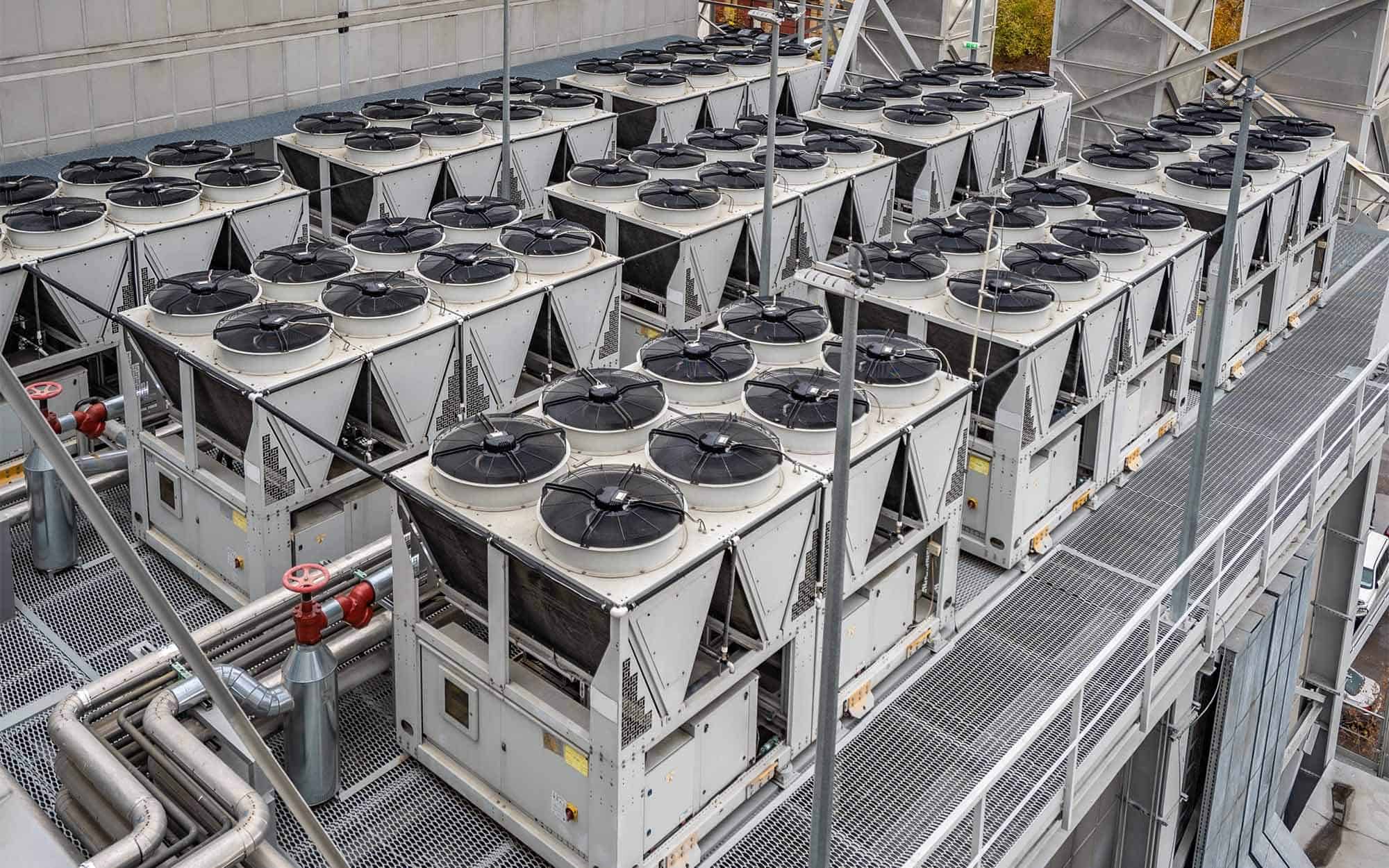
If you take a look at a modern chiller plant, you wouldn’t believe that this technology is younger than 100 years old!
Progress in chilled water system technology was so fast due to the nature of their application. Since most chilled water systems are used to serve enormous skyscrapers or large industrial complexes on a continual basis, improvements in performance of the order of 1% can mean significant cost reduction in the long term.
You can make the claim that chilled water technology wouldn’t have been around if it weren’t for the original air conditioning system. So, let us go back a few hundred years to trace the origins of air conditioning.
In 1758, Benjamin Franklin wrote a letter to his peer explaining that he had managed to cool down mercury in a thermometer by wetting it with different alcohols.

This event is highly regarded to be the first step towards evaporative cooling; however, hundreds of attempts were made by scientists before Ben Franklin.
Experiments with temperature monitoring can be traced back to the ancient Philon of Byzantium (3rd Century BC), however, scientific lab experiments started after Doctor Blas Villafranca started cooling wine using potassium nitrate (1550).
In the 1600s, 1700s and 1800s, hundreds of scientists worldwide were making discoveries left and right in an effort to understand the nature of fluids and how they behave when cooled, heated or pressurized.
A few of such discoveries:
In 1662, Robert Boyle established the law linking pressure and volume of a gas at constant temperature.
In 1715, Gabriel Daniel Fahrenheit developed mercury thermometer.
In 1742, Anders Celsius developed Centigrade Temperature Scale, later renamed Celsius Temperature Scale.
In 1787, Martinus van Marum liquefied ammonia, by compression.
In 1823, John Leslie constructed a vacuum/absorption freezing apparatus in England.
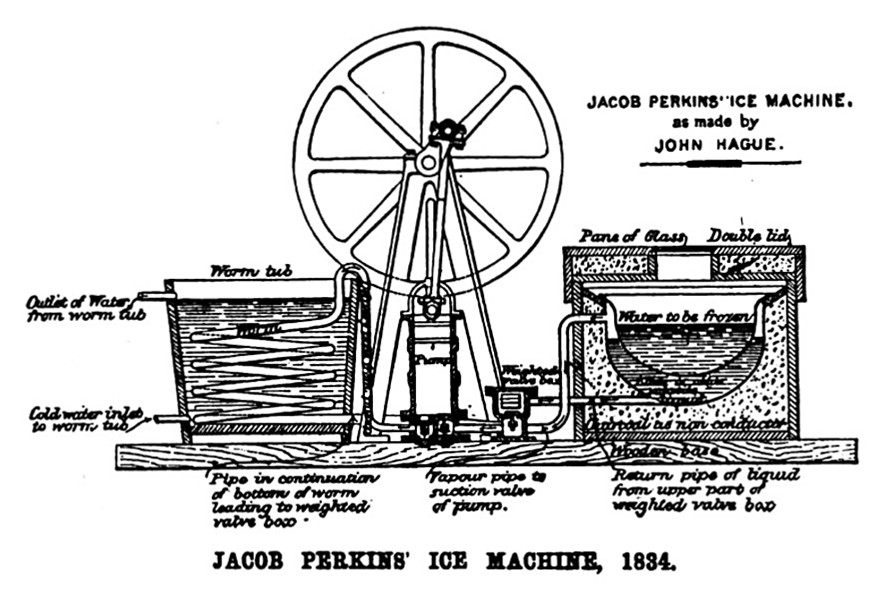
In 1834, Jacob Perkins patents mechanical refrigeration machine.
In 1906, Willis Carrier patents “Apparatus for Treating Air”.
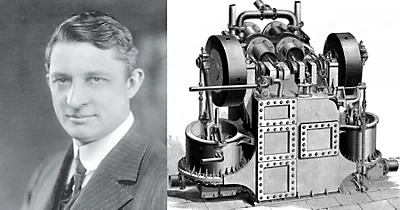
In 1921, the first centrifugal water chiller was patented by Carrier. Before this time, chillers used a reciprocating compressor. The main part of a centrifugal chiller is the centrifugal compressor.
In 1931, Rockefeller Center was designed with air conditioning.
It was in 1938 that Trane introduced systems that rely on refrigerants that are still used in modern-day chillers: the compressor, the condenser, and the evaporator.
In the 1950s, the plastics industry started using industrial chillers to help meet the demand for quality plastics. This business decision allowed plastics to take center stage as the go-to material for everything from toys to bottling.
We cannot give too much credit to one person for inventing the modern chilled water system because it obviously stands as the result of hundreds of years of research and small discoveries.
Up to this day, scientists and engineers are still experimenting with new technologies to build more efficient and sustainable systems.
And we, as engineers and designers, need to keep our systems up-to-date and in line with the best (best yet) practices.
Yours truly,
Tony
Leave a Reply